


11 Jun Self-Touch for Nervous System Regulation: Simple Somatic Practices for Calm and Safety
Have you ever noticed yourself rubbing your temples when you feel tense, placing a hand on your chest when you’re emotional, or wringing your hands when anxiety rises?
These gestures may seem small, but they are deeply intelligent. The body often reaches for comfort before the mind has words for what it needs.
Intentional self-touch is a simple, accessible way to support nervous system regulation. It can help create a felt sense of safety, grounding, and connection, especially during moments of stress, anxiety, overwhelm, or emotional disconnection.
We often look outside ourselves for soothing: a hug from someone we love, a cozy blanket, warm tea, soft music, or a peaceful room. These supports can be beautiful and meaningful. But one of the most reliable tools we have is already with us: our own hands.
Through gentle, mindful touch, we can offer the body a message of care: I am here. I am listening. You are not alone.
For those healing from chronic stress, trauma, anxiety, or burnout, this kind of SE-informed practice can become a powerful addition to a broader healing toolkit.

Why Self-Touch Helps Calm the Nervous System
Your nervous system is constantly scanning for cues of safety and danger. This process happens largely beneath conscious awareness. A tone of voice, facial expression, sudden sound, memory, body sensation, or environment can all influence whether your system moves toward protection or ease.
When the body senses threat, the sympathetic nervous system may activate. You might feel restless, anxious, tense, irritable, or ready to fight or flee. When the body senses enough safety, the parasympathetic nervous system can support rest, digestion, connection, and recovery.
Gentle self-touch can offer a cue of safety.
A hand over the heart, a slow stroke along the arms, or a supportive self-hug can help the body orient toward the present moment. Touch brings awareness back to the body. It can soften racing thoughts, support emotional regulation, and create a sense of containment when feelings feel too large.
This is part of what makes Somatic Experiencing® so meaningful. Rather than trying to think our way into calm, SE invites the body into the conversation through sensation, awareness, and gentle tracking of the nervous system.
Imagine your nervous system as a frightened animal. It does not need criticism, force, or urgency. It needs steadiness. It needs softness. It needs a signal that says, You are safe enough right now.
Your own hands can become that signal.
How to Practice Self-Touch Safely and Gently
Self-touch does not need to be complicated. It also does not need to be perfect.
The most important part is to move slowly and pay attention to what your body actually wants. For some people, touch feels comforting right away. For others, especially those with trauma histories, certain forms of touch may feel unfamiliar, uncomfortable, or even activating.
That is okay.
You are allowed to adjust, pause, or stop. You might begin by placing your hands near your body instead of directly on it. You might choose pressure over stroking, or stillness over movement. The practice is not about forcing calm. It is about building trust with your own body.
Below are a few gentle self-touch practices to explore.
1. Hand-on-Heart Practice for Grounding
Place one or both hands over the center of your chest.
Notice the warmth of your palm. Feel the gentle weight of your hand. Sense the rise and fall of your breath beneath your touch.
You do not need to breathe in any special way. Simply notice. If it feels supportive, you might silently say:
I am here.
This is a moment of care.
I can take this one breath at a time.
This practice can be especially grounding during anxiety, sadness, grief, or moments when you feel disconnected from yourself. It offers a direct gesture of self-compassion and emotional presence.
2. Gentle Face and Neck Massage for Tension Relief
Many of us carry stress in the jaw, forehead, temples, and neck. A few minutes of gentle touch in these areas can help release some of that held tension. Begin by placing your palms softly over your eyes. Let the darkness and warmth settle for a few breaths.
Then, using your fingertips, make small circles at your temples. Allow your jaw to loosen. Massage the hinge of the jaw just below the ears, moving slowly and gently. You can also stroke the sides of the neck from just below the ear toward the collarbone. Keep the pressure light. Notice whether your body wants slower movement, firmer pressure, or more stillness.
For extra support, some people like pairing this practice with soft background sound. A calming sound machine, such as the Ora Sound Machine, may help create a soothing environment for rest, reflection, or evening nervous system care.
3. The Self-Hug or Containment Hold
Cross your arms over your chest. Place your right hand on your left upper arm or shoulder, and your left hand on your right upper arm or shoulder.
Gently squeeze or hold. Let yourself feel the edges of your body.
This practice can create a sense of containment when the world feels too loud, too fast, or too much. It can remind the nervous system: I have boundaries. I have support. I can hold myself through this moment.
A self-hug can be especially helpful when emotions feel scattered or overwhelming. It is a simple way to return to your body and offer yourself the feeling of being held.
Some people also find external weight comforting. A weighted blanket, such as the Bearaby Weighted Blanket, may offer a similar sense of gentle pressure and containment during rest or bedtime. As with any supportive tool, the key is to notice what feels good and safe for your body.
4. Mindful Hand Massage
Your hands do so much for you each day. They work, hold, cook, type, clean, comfort, reach, and create.
Take one hand in the other. If you like, add a small amount of lotion or oil. Slowly massage the palm with your thumb. Move up each finger. Notice the texture of your skin, the temperature of your hands, and any areas of tightness or ease.
This practice can be both grounding and meditative. It invites your attention away from anxious thinking and back into direct sensation.
You might use it as a short pause between tasks, before a difficult conversation, after a stressful email, or at the end of the day.
Journal Prompts for SE-Informed Reflection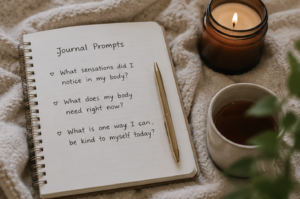
After practicing self-touch, take a few moments to reflect. Journaling can help you notice patterns and deepen your relationship with your body.
Try these prompts:
• What sensations did I notice before, during, and after the practice?
• When I placed my hand on my heart, what message did I feel myself receiving?
• What kind of support did my nervous system seem to need today?
• What felt pleasant, neutral, uncomfortable, or surprising in my body?
For a more structured collection of grounding tools, Dr. Sara Teta’s ebook, 33 Nervous System Supports, offers practical, therapist-approved practices to ease stress and reset your mind anytime, anywhere.
Self-Touch and Inner Child Healing
For many people, anxiety, self-doubt, or the feeling of being “too much” has roots in earlier life experiences. As children, we need comfort, consistency, warmth, and safe connection. When those needs are not met consistently, the body may continue searching for safety long into adulthood.
Self-touch can become a gentle form of re-parenting.
When you place a hand on your heart, hold your own face, or wrap your arms around yourself, you are offering care to the younger parts of you that may still long to feel protected.
The message is simple, but powerful:
You are safe now.
You are cared for.
I am here with you.
This does not erase the past. But it can begin to build a new internal experience, one where you become less dependent on external reassurance and more connected to the steady presence within yourself.
When Self-Touch Feels Difficult
It is important to name this: self-touch will not feel soothing for everyone at first.
If you have experienced trauma, body-based practices may bring up unexpected feelings. You might notice numbness, discomfort, sadness, resistance, or even irritation. This does not mean you are doing it wrong.
It may simply mean your nervous system needs more time, choice, and support.
Start small. Keep your eyes open if that feels safer. Touch your sleeve instead of your skin. Place your hand beside your body rather than on it. Let the practice be an invitation, not a demand.
Tools such as the Truvaga Vagus Nerve Stimulator may also be something some people choose to explore as part of a broader nervous system support plan, especially when paired with guidance from a qualified provider. No tool is a substitute for therapy, but supportive resources can sometimes complement the healing process.
A Gentle Step Toward Nervous System Healing
Self-touch is not about fixing yourself. It is about relating to yourself differently.
Each time you pause, breathe, and offer your body a gesture of care, you are practicing a new way of being with yourself. You are teaching your nervous system that it does not have to move through stress alone.
Healing often happens through small, repeated moments of safety.
A hand on the heart.
A softening of the jaw.
A gentle self-hug.
A few quiet breaths.
These practices may seem simple, but simplicity can be powerful.
If you are navigating anxiety, trauma, chronic stress, or emotional overwhelm, you do not have to do it alone. Somatic Experiencing®, EMDR, trauma-informed therapy, and nervous system support can help you understand your patterns and build a more compassionate relationship with your body.
If you are ready to explore a more grounded, holistic path toward healing, I invite you to book a free 15-minute introductory consultation. We are accepting new clients in New York, Connecticut, Rhode Island and Michigan. Together, we can begin creating more safety, resilience, and connection, one gentle step at a time.
Sorry, the comment form is closed at this time.