


23 Jul Finding Calm in the Chaos: A Mindfulness Guide for Your Nervous System.
Have you ever driven home and realized you barely remember the route? Or opened a book and noticed your mind was somewhere else entirely, replaying a conversation, planning tomorrow, or worrying about something that has not happened yet?
These moments of “checking out” are very human. They are also a sign that your mind and body may be moving through the day on autopilot.
Mindfulness is the practice of gently returning to the present moment. It does not mean forcing your mind to be blank or becoming calm on command. Instead, mindfulness invites you to notice your thoughts, emotions, body sensations, and surroundings with more curiosity and less judgment.
For people feeling overwhelmed, distracted, anxious, or disconnected, mindfulness may offer a simple way to pause, listen inward, and support the nervous system. It is not a cure-all, and it does not replace therapy or medical care, but it can become one supportive tool for emotional regulation and self-compassion.
What Is Mindfulness?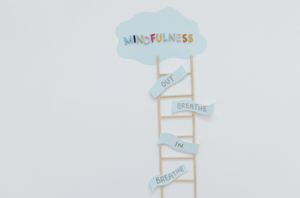
Mindfulness means paying attention, on purpose, to what is happening right now.
That may sound simple, but most of us spend much of the day pulled into the past or the future. We replay what we said. We imagine what might go wrong. We move from task to task without really noticing how we feel.
Mindfulness helps us step out of that automatic pattern. It teaches us to observe our experience rather than immediately react to it.
A helpful image is to imagine your thoughts as cars on a busy road. Some move quickly, like anxious thoughts. Some feel heavy, like sadness or shame. Mindfulness does not ask you to stop the traffic. It asks you to sit safely on the side of the road and notice what passes by.
You are not the traffic. You are the observer.
What Mindfulness Is Not
Mindfulness is not about becoming perfectly peaceful, spiritually advanced, or “good” at meditation. It is also not about ignoring pain or pretending everything is fine.
Your mind will wander. That is not failure; that is part of the practice. Each time you notice your attention has drifted and gently bring it back, you are practicing the return.
Mindfulness and the Nervous System
From a therapeutic perspective, mindfulness can be especially meaningful because it gives the nervous system a chance to register safety in the present moment.
When we are stressed, overwhelmed, or carrying the echoes of past trauma, the body may respond as if danger is nearby. The breath becomes shallow. Muscles tighten. The mind scans for what could go wrong. Even when there is no immediate threat, the body may still prepare to protect us.
Mindfulness can help some people notice these responses earlier and meet them with care. For example, you might realize, “My chest is tight,” “My shoulders are bracing,” or “I am spiraling into future worries.” That moment of noticing matters. It creates an opening.
Research suggests mindfulness meditation may support psychological well-being for some people, including modest improvements in stress, anxiety, depression, and emotional reactivity. Still, it is not the right tool for everyone in every moment.
If mindfulness brings up distress, flashbacks, panic, or disconnection, consider practicing with a licensed mental health professional who understands trauma and nervous system regulation.
 How to Start a Mindfulness Practice Today
You do not need a silent retreat, a special cushion, or an hour of free time. You can begin with one minute.
1. Try the Mindful Minute
Find a comfortable seat and place both feet on the floor if that feels grounding. Set a timer for one minute. Soften your gaze or close your eyes if that feels safe.
Notice your breath. You might feel air at the nostrils, movement in the chest, or expansion in the belly.
When your mind wanders, gently return to the breath. When the timer ends, notice one thing: your body, your mood, or the room around you.
This small practice is not about doing it perfectly. It is about practicing the return.
2. Add Mindfulness to Something You Already Do
Mindfulness becomes easier when it is woven into daily life.
With morning coffee or tea, notice the warmth of the mug, the scent, the first sip, and the way your body receives it.
While walking, feel your feet meet the ground. Notice the air on your skin, the rhythm of your steps, or one sound nearby. This is also part of the beauty of nature-based and walk-and-talk therapy: the senses can help bring us back into the present moment.
During a conversation, practice listening before planning your response. Notice the other person’s tone and the space between speaking and reacting.
3. Use the Body as an Anchor
For some people, the breath is calming. For others, focusing on the breath can feel uncomfortable. You can choose another anchor: your feet on the floor, the support of the chair beneath you, one sound you can hear, or one color you can see.
The best anchor is the one that helps your body feel a little more here.
Journal Prompts for Reflection
Writing can help you notice patterns with more gentleness. After a short mindfulness practice, you might ask:
What did I notice in my body today?
When did my mind wander, and what was it trying to protect, solve, or remember?
Was there one moment today when I felt even slightly more present?
Gentle Supports for a Mindfulness Routine
Some people find it easier to practice mindfulness when they create a small ritual around it. A soft blanket, gentle sound, or brief written guide can signal that it is time to slow down.
For readers building a grounding routine, Dr. Sara Teta’s ebook, “33 Nervous System Supports,” can be a practical resource for exploring therapist-informed tools you can return to throughout the day. For those creating a calming bedtime rhythm, some readers find a weighted blanket or soft sound machine supportive as part of a broader wind-down routine. These tools are optional; the heart of mindfulness is still your own attention, offered with compassion.
Coming Back to Yourself
Mindfulness may be worth exploring if you often feel rushed, emotionally reactive, disconnected from your body, stuck in repetitive thoughts, or unsure how to pause before responding.
It may also pair well with nervous-system-informed therapies such as Somatic Experiencing, EMDR therapy, the Safe and Sound Protocol, Reiki, or nature-based therapy. In these settings, mindfulness is not about forcing calm. It is about learning to notice what is happening inside with more safety, support, and choice.
Mindfulness is not about fixing yourself. It is about remembering that you are allowed to be present with yourself as you are.
Some days, mindfulness may feel peaceful. Other days, it may simply mean noticing that you are tired, tense, distracted, or tender. That noticing is still meaningful. It is a quiet act of self-care.
If you are ready to explore how nervous-system-informed therapies like Somatic Experiencing, EMDR, the Safe and Sound Protocol, Reiki, or nature-based therapy can support your journey, I’m here when you are. If you reside in New York, Connecticut, Rhode Island, or Michigan, contact me today to book your free 15-minute introductory consultation. Let’s begin creating a more grounded, balanced, and fulfilling life.
This blog is for educational purposes only and does not replace therapy, diagnosis, medical care, or crisis support. If you are in immediate danger or experiencing a mental health emergency, please contact local emergency services or a crisis hotline.
Some of the links below are affiliate links. If you purchase through them, I may earn a small commission at no additional cost to you. I only ever recommend resources I genuinely trust and believe can support your healing.
Sorry, the comment form is closed at this time.