


15 Oct How to Change Old Patterns: The Armor You No Longer Need
Please note: Any client stories or examples shared on this blog are composites drawn from common themes across many experiences. All names are fictitious, and nothing here represents any single person or actual client.
Have you ever found yourself reacting in a way that feels old and automatic, almost like you’re on autopilot? Maybe it’s a flash of anger when you feel criticized, a retreat into silence when a conversation gets difficult, or a need to please everyone around you, even at your own expense.
These patterns, which may now cause us pain or frustration, sometimes began as ways to cope with difficult circumstances. They were the armor we forged to protect ourselves.
But what happens when that armor starts to feel too heavy?
Learning how to change old patterns begins with noticing what happens, understanding what the pattern may be doing for you, and practicing a small, safer alternative. You do not have to uncover every childhood memory or force yourself into uncomfortable situations to begin.
As a therapist, I often sit with clients who feel stuck in these loops. A significant part of our work together is gently exploring these patterns not as enemies to be defeated, but as responses that deserve understanding. By understanding the job they once had, we can begin to make room for more choice.
 Why Do We Repeat Old Patterns?
A coping pattern is a familiar way of responding to stress, discomfort, or uncertainty. People-pleasing, perfectionism, and withdrawing during conflict can become habitual because they offer short-term relief, even when their long-term costs are painful.
Perhaps you grew up in a chaotic home where the only way to get by seemed to be becoming invisible. Your pattern might now be to shy away from the spotlight at work, even when you deserve recognition. Or maybe you learned that the only way to receive love was to be perfect. Today, that might look like exhausting perfectionism and a fear of making mistakes.
Not every recurring behavior comes from childhood or trauma. Current stress, family expectations, temperament, and repeated experiences can also shape how we respond. You do not need a trauma label for your struggles to deserve care.
When People-Pleasing Becomes Exhausting
Let’s look at a common example. Sarah, a composite of many clients I’ve seen, came to therapy because she was exhausted by her inability to say “no.” She constantly overcommitted at work and in her personal life, leaving her drained and resentful. Her pattern was relentless people-pleasing.
As we explored her history, we discovered that as a child, Sarah’s caregiver was often emotionally volatile. Being helpful and agreeable had sometimes reduced conflict. Her people-pleasing wasn’t simply a flaw; it had become a coping strategy.
Now, even with people who respected her boundaries, declining a request felt risky. The familiar “yes” offered immediate relief, followed by exhaustion. Understanding that cycle gave us somewhere compassionate and practical to begin.
How Stress Can Make Familiar Reactions Feel Automatic
Stress affects both mind and body. You might notice a racing heart, tense muscles, difficulty concentrating, or an urge to leave a conversation. After trauma, some people experience heightened alertness or feel detached. These experiences vary and do not, by themselves, establish a diagnosis. NIMH explains common reactions to traumatic events and when to seek support.
Rather than assigning every reaction to a particular nervous system state, it can be more useful to ask: “What am I noticing, and what support do I need right now?”
Recognizing this is a first step toward self-compassion. An automatic reaction is not a character flaw. With practice and support, you may find more room to choose your next response.
That also means checking your present circumstances. If a relationship or environment is still unsafe, the priority is support and protection. You do not need to persuade yourself that a real threat is only an old pattern.
Honoring the Pattern Before Letting It Go
Trying to force yourself to change can create more internal conflict and shame. Instead, you might turn toward the pattern with curiosity.
Think of your pattern like an old, loyal guard dog that barks ferociously at everyone who comes to the door: the mail carrier, friends, family. It’s disruptive and exhausting, but the dog isn’t bad. It’s trying to do its job of protecting the house.
The invitation is to notice when protection is still needed and when a different response might be possible. You can appreciate a pattern’s original purpose while acknowledging the ways it now limits you.
For Sarah, this meant recognizing how much effort had gone into keeping other people comfortable. She could begin asking, “What do I need?” alongside “What will make them happy?”
You do not have to feel grateful for painful experiences. Understanding why a response developed does not mean excusing harm or keeping the response forever.
Journal Prompts for Reflection 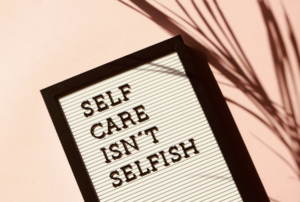
Take a moment with your journal and gently explore one of your patterns. Stay with present-day examples if looking back feels overwhelming.
- Identify a pattern: Describe a recurring behavior or emotional reaction you’d like to change. For example, “I shut down during conflict,” or “I get defensive when I receive feedback.”
- Explore its purpose: What happens just before this response? What might it help you avoid or manage? You do not need to know exactly where it began.
- Acknowledge its service: If it feels meaningful, write a short thank-you note to this pattern. For example: “Thank you for helping me feel invisible when I needed to be.”
- Consider today’s needs: What would a little more choice look like in this situation?
Pause if reflection increases your distress. You can return another day or bring these questions to therapy.
How to Change Old Patterns, One Small Step at a Time
This is not about giant leaps but small, incremental steps that build trust within yourself. Choose one practice that feels manageable rather than turning change into another demand.
1. Practice Mindful Awareness
Simply begin by noticing when the pattern shows up without judgment. Say to yourself, “Ah, there’s the people-pleaser,” or “There’s the urge to shut down.” This may create a little space between impulse and action.
If you only recognize the pattern afterward, that still counts. Notice what happened with kindness and consider what might help next time.
2. Find a Comfortable Way to Ground Yourself
When you notice the pattern, what do you feel in your body? A tightness in your chest? A knot in your stomach? If it feels comfortable, notice your feet against the floor or the support of your chair. Let your breathing stay natural.
You don’t need to fix the feeling. If focusing inward makes things harder, look around and name a few objects you see. Stop any practice that increases discomfort. These are everyday grounding options; they are not a substitute for Somatic Experiencing or another therapy.
For additional optional practices, my ebook, 33 Nervous System Supports, offers ideas to explore at your own pace. This is my own paid resource; purchasing it is not necessary to practice the steps here.
3. Try a Small Alternative
Instead of trying to do the complete opposite of your pattern, try a tiny, manageable version. If you’re a people-pleaser, don’t start with your most difficult conversation. Start by saying, “Let me check my calendar and get back to you.”
If you tend to shut down, you might say, “I need a short break. Can we come back to this?” Choose situations where your limits are likely to be respected. A small experiment offers information; it does not have to go perfectly to be useful.
4. Notice Progress Without Demanding Perfection
Afterward, ask: What did I notice? What helped? What would make the next attempt more manageable?
Progress might mean recognizing a pattern sooner, asking for time, or recovering from a difficult exchange with less self-criticism. Returning to an old response under stress does not erase what you have learned.
You Don’t Have to Do This Alone
Letting go of lifelong armor can feel vulnerable and scary. It’s a journey of unlearning and relearning, and it’s one you don’t have to take by yourself.
If patterns repeatedly affect your relationships, work, or well-being, therapy can offer space to explore them. Psychotherapy may involve identifying automatic thoughts, practicing different behaviors, and building coping skills, as described in NIMH’s guide to psychotherapies.
Depending on your needs, we may discuss approaches such as CBT, EMDR trauma therapy, or Somatic Experiencing. Choosing an approach is a shared conversation about your goals, preferences, and the evidence relevant to your concerns.
Whether you’re in New York or Connecticut and looking for support, or simply seeking to understand yourself better, there is room to begin gently. You do not have to put down all your armor at once.
If you’re ready to explore what more choice could feel like, book a free 15-minute consultation. Let’s discover what’s possible for you, at your pace.
This article is for education and does not replace therapy, diagnosis, or medical care.
No Comments