

26 Jun How Nature Connection Supports Nervous System Healing
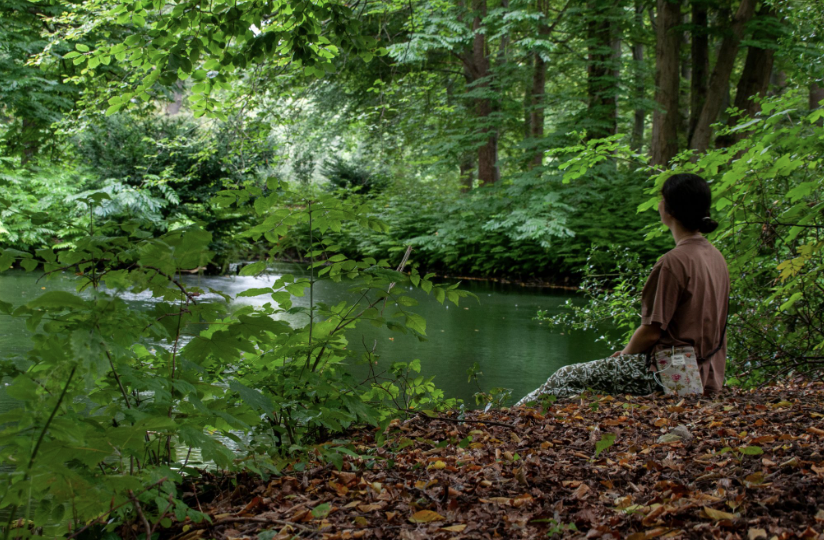
Have you ever walked the same street every day and suddenly realized you could not name the trees lining the sidewalk? Or sat near water and felt your body soften before your mind had time to understand why?
For many people, healing begins with noticing.
When we are overwhelmed, anxious, burned out, or carrying the effects of trauma, it is common to feel disconnected from the body, from intuition, from other people, and even from the world around us. Life can start to feel like something we move through rather than something we are fully part of.
Nature offers a gentle way back.
As a therapist specialized in the nervous system, I often think about the healing power of place. The land around us can become more than scenery. It can become a source of grounding, belonging, and regulation.
This is where the concept of topophilia becomes meaningful.
Topophilia means “love of place.” It describes the emotional bond we can form with a particular environment: a favorite walking trail, a park bench, a river path, a garden, a neighborhood tree, or the view from a familiar window. These places can begin to hold us. They can remind the body that it is here, that it belongs, and that it does not have to be in a constant state of bracing.
For anyone navigating anxiety, trauma, life transitions, grief, burnout, or a lingering sense of disconnection, cultivating a relationship with place can be a deeply supportive practice.
What Is Place Blindness?
Many of us move through our daily environments without really seeing them.
We commute, run errands, walk the dog, answer messages, listen to podcasts, and mentally rehearse the next thing on the list. Our bodies may be outdoors, but our attention is often somewhere else.
This kind of disconnection is sometimes called place blindness. It refers to the way we can become unaware of the details, rhythms, and living presence of the places we inhabit.
You may pass the same trees every morning without noticing when they bud, flower, turn color, or lose their leaves. You may hear birdsong without registering the different calls. You may walk by the same patch of moss, stream, stone wall, or wildflower without ever letting it become part of your inner map.
This is not a failure. It is often a sign of modern nervous system overload.
When we are moving quickly, scrolling often, or living in chronic stress, the body learns to narrow its attention. It scans for tasks, threats, deadlines, and demands. Over time, the subtle details of the natural world can blur into the background.
Yet the nervous system is constantly gathering information from the environment. It is always asking: Am I safe? Can I settle? Do I need to prepare? Is there support here?
When we begin to notice our surroundings with curiosity, we send a different message to the body. We gently tell the nervous system: I am here. I am present. I can orient. I can take in what is around me.
That simple act of orienting can be a great support towards a regulated nervous system.
 Why Nature Connection Can Support the Nervous System
Nature does not ask us to perform.
A tree does not need us to be productive. A river does not need us to explain ourselves. A trail does not require us to have everything figured out before we arrive.
For many people, this is part of what makes nature feel restorative. It offers a relationship that is steady, sensory, and nonjudgmental.
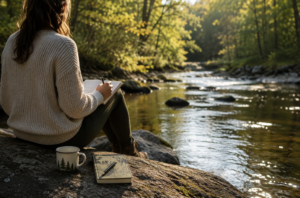
When we slow down enough to notice the natural world, the body often has an opportunity to shift. The breath may deepen. The jaw may soften. The eyes may begin to move instead of fixating. The shoulders may release. The mind may feel less crowded.
This is not about forcing calm. It is about creating conditions where regulation becomes more available.
Nature-based grounding can support:
- Anxiety and stress reduction
- A greater sense of safety in the body
- Reconnection after dissociation or numbness
- Resilience during life transitions
- Mindfulness and present-moment awareness
- A deeper sense of belonging
For trauma survivors, this kind of gentle reconnection can be especially meaningful. Trauma often disrupts a person’s sense of safety, embodiment, and trust. Mindful connection with place can become one small way to rebuild those capacities without pressure.
Rewilding the Senses: A Gentle Practice for Reconnection
Reconnecting with nature does not require a dramatic lifestyle change. You do not need to move to the mountains, become an expert hiker, or know the name of every plant in your neighborhood.
You can begin exactly where you are.
A sidewalk, a small park, a window box, a backyard, a river path, or a tree outside your apartment can all become places of practice.
The goal is not to master nature. The goal is to return to a relationship with place.
1. Take One Familiar Walk More Slowly
Choose a route you already know. It might be around your block, through a local park, or along a path you take regularly.
This time, walk as if you are meeting the place for the first time.
Let your phone stay in your pocket. Allow your pace to soften. Notice what your eyes naturally want to find.
You might ask yourself:
- What colors are here today?
- What is moving?
- What is still?
- Where does my body feel drawn?
This kind of mindful walking can become a simple nervous system reset. You are not trying to achieve anything. You are letting your senses help you return to the present moment.
For additional support, Dr. Sara Teta’s ebook, 33 Nervous System Supports, can be a helpful companion for learning practical, therapist-approved tools to ease stress and come back to yourself throughout the day.
2. Practice Orienting Through the Senses
Orienting is a gentle somatic practice that helps the nervous system register where you are.
Pause for a moment outdoors and slowly look around. Let your eyes move rather than stare. Notice shapes, textures, light, shadow, and distance.
Then bring in the other senses.
- What do you hear nearby?
- What do you hear farther away?
- What does the air feel like on your skin?
- Is there a scent in the air?
- Can you feel the ground supporting your feet?
You may notice subtle shifts as you practice this: the breath softening, the eyes settling, the body beginning to feel a little more here. Sometimes the smallest details like the sound of leaves moving, the warmth of sun on your arm, the sight of a bird landing nearby, can remind the nervous system that support is available. For a deeper exploration of this kind of embodied reorientation, Deb Dana’s Anchored offers a compassionate introduction to working with the nervous system through the lens of Polyvagal Theory.
3. Learn One Name
Choose one plant, tree, bird, or flower you see often and learn its name.
This simple act can change your relationship with your environment. A tree is no longer just “a tree.” It becomes a maple, oak, birch, sycamore, or pine. A bird becomes a robin, cardinal, mourning dove, or sparrow.
Naming is a form of relationship.
It turns the background into a community of living beings. It helps you notice patterns, seasons, and subtle changes. Over time, the places you move through may begin to feel less anonymous and more alive with its own life cycle and role in the ecosystem.
Free tools like plant identification or birding apps like iNaturalist or Merlin Bird ID, or local field guides can make this practice accessible. You might also ask a neighbor, visit a local nature center, or join a guided walk.
4. Create a Restorative Home Ritual
Nature connection does not only happen outdoors.
You can bring elements of grounding into your home through sound, texture, warmth, and rhythm. A cup of tea by a window, a few minutes listening to rain, or lying under a weighted blanket after a long day can all support the body’s need for steadiness.
For some people, tools like a Weighted Blanket may offer comforting deep pressure during moments of stress or overstimulation. Others may find that a Sound Machine helps create a soothing sound environment for rest, sleep, or meditation. These resources are not replacements for therapy, but they can become part of a larger care routine that supports nervous system regulation.
5. Connect With Others Who Care for the Land
A sense of belonging often deepens when we share care with others.
Consider joining a local walking group, conservation organization, gardening project, trail maintenance day, or nature-based workshop. These spaces can provide a gentle community without requiring constant conversation or performance.
You may find that connecting with the land also helps you connect with people who value slowness, stewardship, and presence.
Community can be regulating, especially when it is built around shared attention and care.
Journaling for Nature-Based Reflection
After your next walk or outdoor pause, take a few minutes to reflect and maybe even write down your thoughts and sensations. You can use some of the prompts below or take them as reference:
- What did I notice today that I usually overlook?
- Where did my body feel even slightly more settled?
- Was there a sound, color, texture, or scent that stayed with me?
- If this place had a personality, how would I describe it?
- What did the land seem to offer me today?
These prompts are not about writing perfectly. They are an invitation to listen.
When Reconnection Feels Difficult
It is important to mention that slowing down does not always feel easy.
For some people, stillness can bring up discomfort. Being present in the body may feel unfamiliar or even overwhelming. Nature may feel peaceful one day and activating the next. This does not mean you are doing anything wrong.
Nervous system healing is not linear.
If you have experienced trauma, chronic stress, grief, or anxiety, reconnecting with yourself and your surroundings may need to happen gradually. You may need support, pacing, and practices that honor your capacity.
A Vagus Nerve Stimulator may be of interest for people exploring vagus nerve support as part of a broader wellness routine. As with any nervous system tool, it is best used thoughtfully and, when appropriate, alongside professional guidance.
The deeper invitation is not to force calm. It is to build a relationship with safety, one small experience at a time.
Finding Your Way Back to Belonging.
Learning to love the land around you is a practice of coming home.
Home to your senses.
Home to your body.
Home to the present moment.
Home to the truth that you are part of the living world, not separate from it.
When you begin to notice the places that hold you, you may also begin to notice the parts of yourself that have been waiting for your attention.
Therapy can offer a safe, supportive space for this kind of reconnection. My work combines practices like somatic experiencing and EMDR with an understanding of our deep need for connection: to ourselves, others, and the natural world.
We are ready to support you in your journey back home whenever you are. We are currently accepting new clients for in person sessions in Brooklyn, New York, but we also have virtual sessions for anyone in NY state, Connecticut, Rhode Island, and Michigan. If you are ready to begin, reach out to schedule a free 15-minute introductory consultation.
Sorry, the comment form is closed at this time.