
26 Sep The Surprising Power of a Single Breath.
Have you ever stopped to notice how you breathe? Breathing is something we do thousands of times a day, often without a second thought. Yet this simple, automatic process holds profound power over our physical health, mental clarity, and emotional well-being.
As a therapist specializing in nervous system healing and trauma recovery, I’ve seen firsthand how transforming your breath can transform your life. Breathing is one of the most direct pathways we have to communicate with our nervous system, sending signals of safety and calm.
Many clients come to me feeling overwhelmed, anxious, or stuck. They describe living in a constant state of high alert, like a car alarm that just won’t turn off, or like waking up heavy and sluggish, as if moving through molasses. One of the first things we explore together is the foundation of their physical experience: their breath.
Learning the fundamentals of breathing mechanics isn’t just an exercise; it’s a way to reclaim inner balance and build a foundation for deeper healing.
We will walk you through the how and why of healthy breathing:
- Why nasal breathing matters for health and stress reduction.
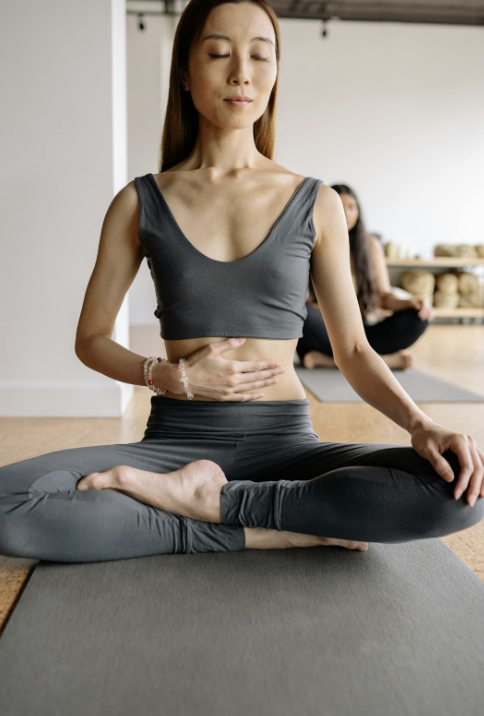
- How to use diaphragmatic breathing (belly breathing) to activate calm.
- Simple breathing exercises you can try today to feel more centered.
Are You a Nose or Mouth Breather?
Take a moment right now. Pause and notice: Is your mouth open or closed? Are you breathing through your nose or your mouth?
Most people don’t realize we are designed to be nasal breathers, not mouth breathers. And this small detail has a big impact on your health.
Your nose is a natural air filtration system. When you breathe through your nose, air is warmed, humidified, and filtered before it enters your lungs. Nasal breathing also regulates airflow, preventing subtle over-breathing that can trigger a stress response.
In contrast, chronic mouth breathing (especially at night) bypasses this system. It can cause dry mouth, introduce unfiltered air into the lungs, and even contribute to low-grade stress and poor sleep. Long-term, it may affect dental health and facial structure.
One of my clients (let’s call her Bell) struggled with anxiety and restless sleep. She was a habitual mouth breather. Simply by consciously switching to nasal breathing during the day, she experienced a significant drop in panic and started sleeping more soundly.
For a deeper dive, the book Breath: The New Science of a Lost Art by James Nestor explores how nasal breathing shaped human evolution and why it’s vital today.
Some Journal Prompt Ideas: Observe Your Breathing Patterns
- When do I catch myself mouth breathing (while stressed, exercising, concentrating)?
- How does my body feel after five minutes of conscious nasal breathing?
- Do I wake up with a dry mouth? (This could signal mouth breathing at night.)
Finding Your Diaphragm: The Key to a Calming Breath
When stress hits, most people take short, shallow chest breaths. This chest breathing is part of the body’s fight-or-flight response. While useful in emergencies, living in this state keeps your nervous system on edge.
The antidote is diaphragmatic breathing (belly breathing). The diaphragm, a dome-shaped muscle at the base of your lungs, creates slower, fuller breaths that activate the vagus nerve. This tells your brain you’re safe, reducing stress and grounding your body.
Think of your torso as a canister. A truly full breath expands not just the belly, but the sides and back of the body: 360-degree breathing.
Awareness Exercise for Diaphragmatic Breathing
- Hands on Belly: Place one hand on your chest and the other on your belly. Inhale gently through your nose. Aim for the belly hand to rise more than the chest hand.
- Hands on Sides: Move your hands to your ribcage. Can you feel your ribs expand outward with your inhale?
- Hands on Back: Place hands at your lower back. See if you can direct breath there, even slightly.
Don’t worry if this feels awkward at first. Years of stress and shallow breathing can weaken the diaphragm. Awareness is the first step.
Releasing Your Diaphragm: A Simple Stretch
If 360-degree breathing feels stuck, try this stretch to open your diaphragm:
- Stand with feet hip-width apart.
- Tuck your pelvis slightly.
- Raise arms overhead.
- Exhale slowly through your mouth with a long “shhh” sound until fully empty.
- Notice the gentle stretch under your ribs, that’s your diaphragm releasing.
- Inhale naturally through your nose. Repeat 3 to 4 times.
Afterward, return to the awareness practice. Do you notice more movement and ease in your breath?
Your Breath is Your Anchor
Your breath is always with you: a free, powerful tool for stress relief, anxiety management, and nervous system
regulation. By shifting from shallow chest and mouth breathing to deep, diaphragmatic nasal breathing, you move from surviving to thriving.
Remember, reconnecting with your body is a practice, not perfection. Be compassionate with yourself as you explore breathwork.
Want more inspiration? The Feel Better, Live More podcast with Dr. Rangan Chatterjee often features episodes on the science and benefits of breathwork.
Ready to Transform Your Nervous System?
If you’re struggling with stress, anxiety, or trauma, know that you don’t have to do this alone. Breathing practices are a powerful foundation, but working with a trained therapist can help integrate them for deeper, lasting healing.
If you are in New York or Connecticut and want support in healing your nervous system, I invite you to book a free 15-minute consultation call. Let’s take the first step together toward a more balanced, fulfilling life.
Sorry, the comment form is closed at this time.